

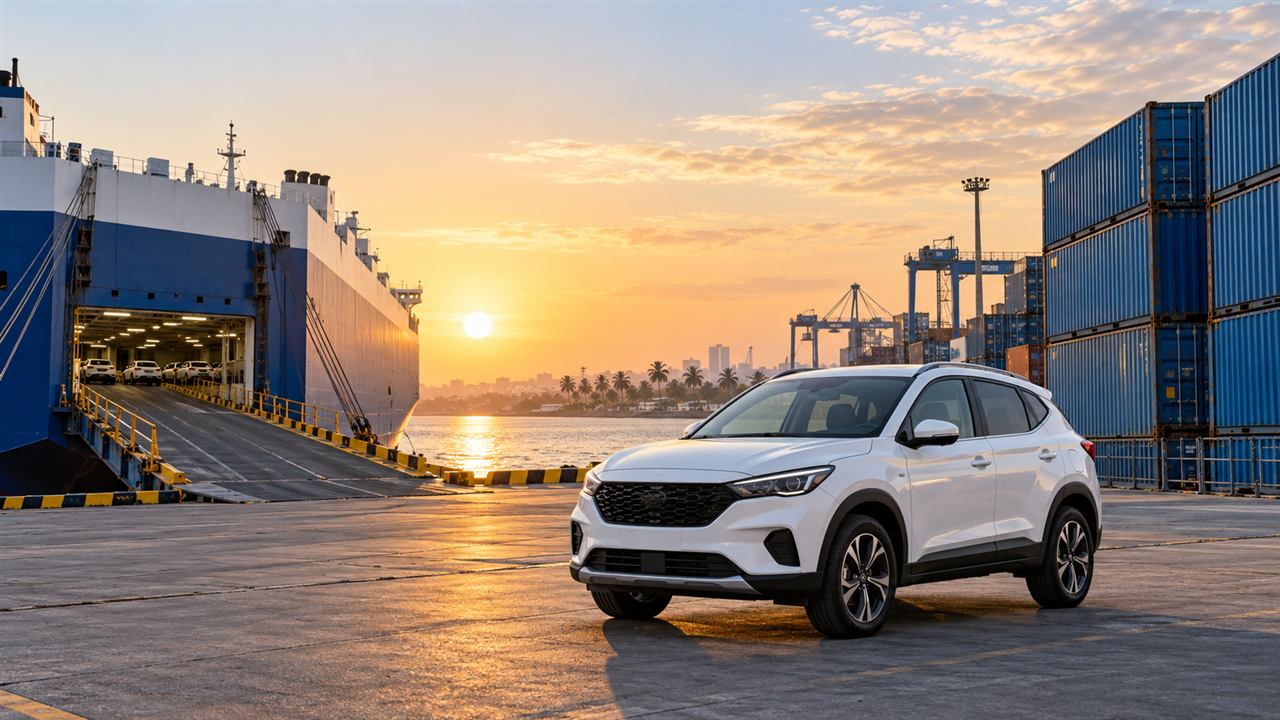
Choosing a shipping method is a booking decision, not an afterthought. Before you pay for a used car abroad, ask whether the vehicle, its condition and its destination port suit roll-on/roll-off (RoRo) or a container—and get the complete written quote for the option that is actually available on your route.
Start with what each method physically does
On a RoRo service, a driveable vehicle rolls on to a specialised vessel via a ramp and rolls off at the destination. The vehicle is secured on a deck for the sea passage; it is not lifted into a box. That makes RoRo a natural starting point for an operable passenger car where the carrier serves both ports. Wallenius Wilhelmsen’s ocean-transport overview describes the ramp-based process and the way self-propelled vehicles move on their wheels.
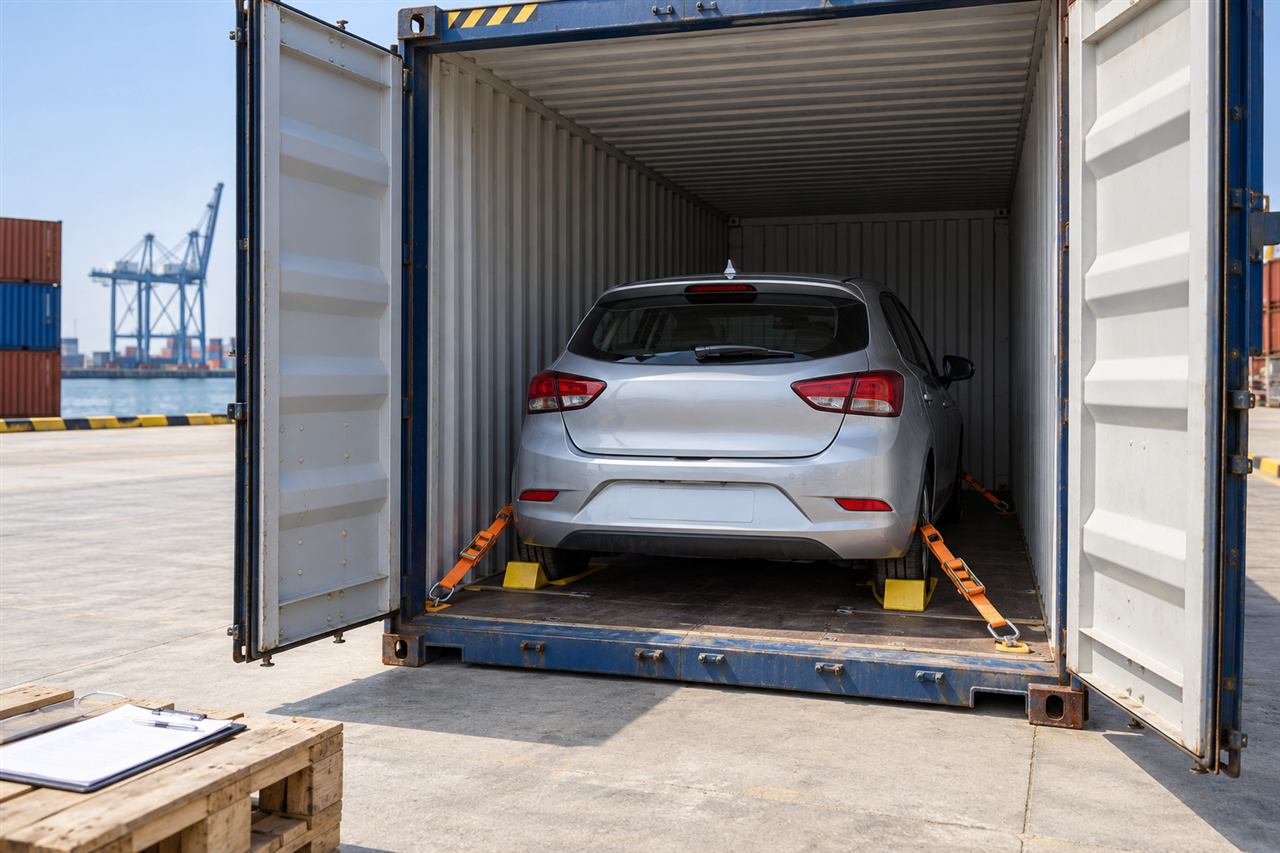
Container shipping puts the vehicle inside a freight container, where it must be loaded and secured for the journey. It can be useful when the carrier’s container network better matches the origin and destination, or when the shipper needs the vehicle containerised for an onward leg. Maersk’s Cars in Containers overview notes that the vehicle remains fastened and containerised through the trip and that containers can transfer to trucks or rail.
Use this five-question filter before requesting quotes
- Can the car move and is it honestly described? A non-running, collision-damaged, flooded or leaking vehicle can change acceptance and pricing completely. Do not call damage “minor” in a booking request: send the carrier clear photos and the actual condition.
- Is there a RoRo sailing to the destination port? A method that looks cheaper in a generic online estimate is irrelevant if there is no usable sailing, if the discharge port does not fit your clearance plan, or if an onward road move erases the saving.
- What does the quote include at both ends? Compare origin delivery, ocean freight, marine insurance, documentation, terminal/handling charges, destination delivery or collection, storage exposure and any inspection or clearing cost. Ask each provider to label the inclusions and exclusions in writing.
- Does the destination’s import rule make the car a bad purchase anyway? Confirm eligibility before booking—not after the vehicle is afloat. Age, steering position, roadworthiness, documentation and tax valuation rules are country-specific.
- What powertrain are you shipping? For battery-electric vehicles, hybrids and any damaged vehicle, disclose the power source and condition when asking for a quote. Maersk’s October 2026 vehicle-booking advisory says container bookings depend on correct commodity classification and vehicle condition; it also says it will not accept damaged or defective batteries, flooded/water-damaged vehicles, leaking vehicles or loose spare batteries packed with the vehicle.
What “cheaper” should mean
Do not judge RoRo against a container on the ocean-freight line alone. RoRo can reduce handling for a running vehicle because it is driven onto and off the ship; containerisation can be the better operational fit where the carrier’s network, inland hand-off or security needs justify it. MSC’s current RoRo explainer similarly frames RoRo as suitable for driveable or towable cargo and says the container option can make more sense for non-running vehicles, added weather protection, security needs or wider port coverage. Neither description is a price guarantee for a private buyer—route, vehicle dimensions, port charges and carrier acceptance decide the real number.
That leads to a practical rule: request like-for-like quotes with the same origin point, destination port, vehicle VIN, dimensions, condition, target sailing window and insurance basis. A quote that omits the local port and clearance side is not comparable with one that includes it.
The arrival country can overturn the shipping decision
Rules are not interchangeable across African markets. In Ghana, the Ghana Revenue Authority’s vehicle-import guidance identifies the Bill of Lading/waybill and title among clearance documents, explains that duty calculations use vehicle information including VIN, model, year and make, and warns importers to make the necessary enquiries before shipping. It also lists local carrier, terminal and agent charges separately from taxes—exactly why a freight quote is not a landed-cost quote.
Kenya is different again: the Kenya Revenue Authority’s motor-vehicle procedure says an imported vehicle must be less than eight years from first registration, right-hand drive and subject to the required pre-shipment roadworthiness inspection. Those eligibility checks belong before the shipment is booked. If you are importing elsewhere, use that country’s customs authority and standards regulator—not a social-media checklist—to test eligibility and duties.
Protect the paperwork chain
Keep the seller’s invoice, export title/logbook, inspection evidence where required, insurance record, carrier booking confirmation and Bill of Lading details aligned. Check the VIN character by character across every document before shipment. Ghana’s GRA explains that a consignee with the title and Bill of Lading may pay duty before arrival; Kenya’s KRA lists the original commercial invoice, original logbook, Bill of Lading and pre-shipment inspection certificate among the supporting documents. These are different systems, but the discipline is the same: the shipping document is part of the import file, not merely a delivery receipt.
Bottom line
Choose RoRo when the vehicle is running, the route genuinely serves your destination and the all-in quote makes sense. Choose a container when it is the available or operationally stronger route for the vehicle and destination—and only after the carrier confirms the vehicle’s condition, cargo classification and securing plan. In either case, clear the destination’s eligibility rules before paying the seller’s final balance.
Sources
- Wallenius Wilhelmsen — Ocean transportation / RoRo
- Maersk — Cars in Containers
- Maersk — Booking Vehicles for Container Transport, 19 October 2026
- MSC — What is RoRo Shipping? Benefits & Alternatives
- Ghana Revenue Authority — Vehicle Importation
- Kenya Revenue Authority — Procedures for Motor Vehicle Importation
Image credits
- Cover: original editorial illustration generated for Vroom Africa with OpenAI; no third-party image used.
- In-article figure: original editorial illustration generated for Vroom Africa with OpenAI; no third-party image used.

